The shop floor
Eight photographs of barbershop chairs, clippers, combs and razors, licensed for commercial use and credited on the privacy page. None is presented as work carried out by this business.
-
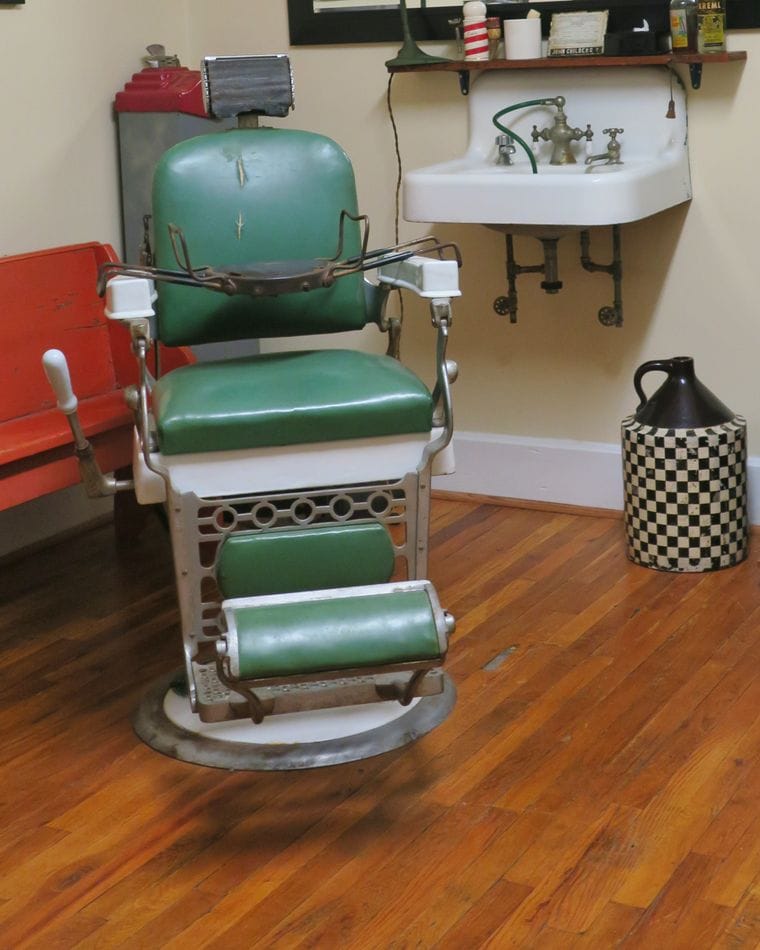
01 A barber chair of the old pattern, with a hydraulic base, a headrest and a footrest. The chair is pumped to the height that puts the client's head level with the barber's hands, which matters more to the cut than anything else about it. -
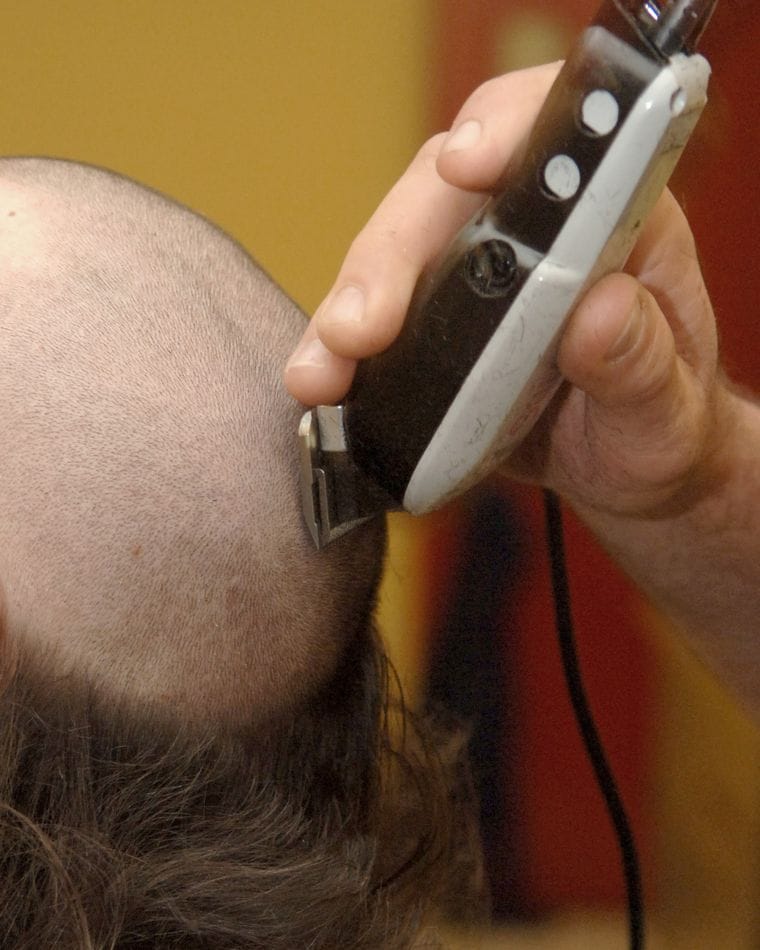
02 A clipper taken up the back of the head without a guard. Working against the direction of growth lifts each hair into the blade, which is why the base of a fade is cut upward and the blend above it is worked in short flicks. -
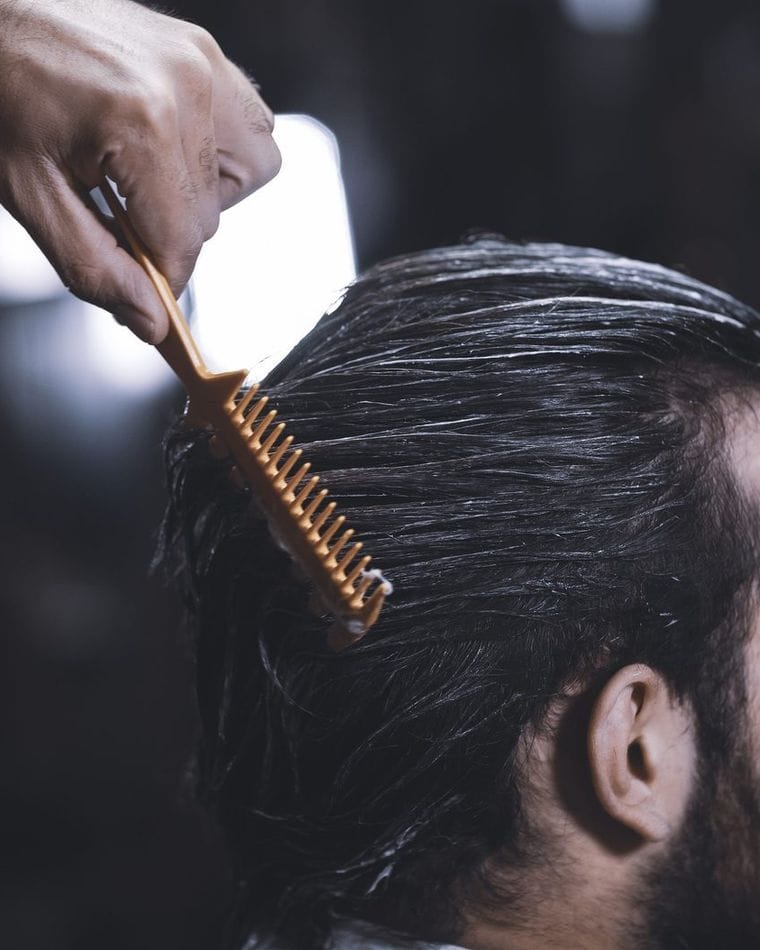
03 A comb drawn back through slicked hair. The comb sets the direction the hair will fall before any length comes off, and a style worn back is cut with the hair combed back rather than flat to the head. -
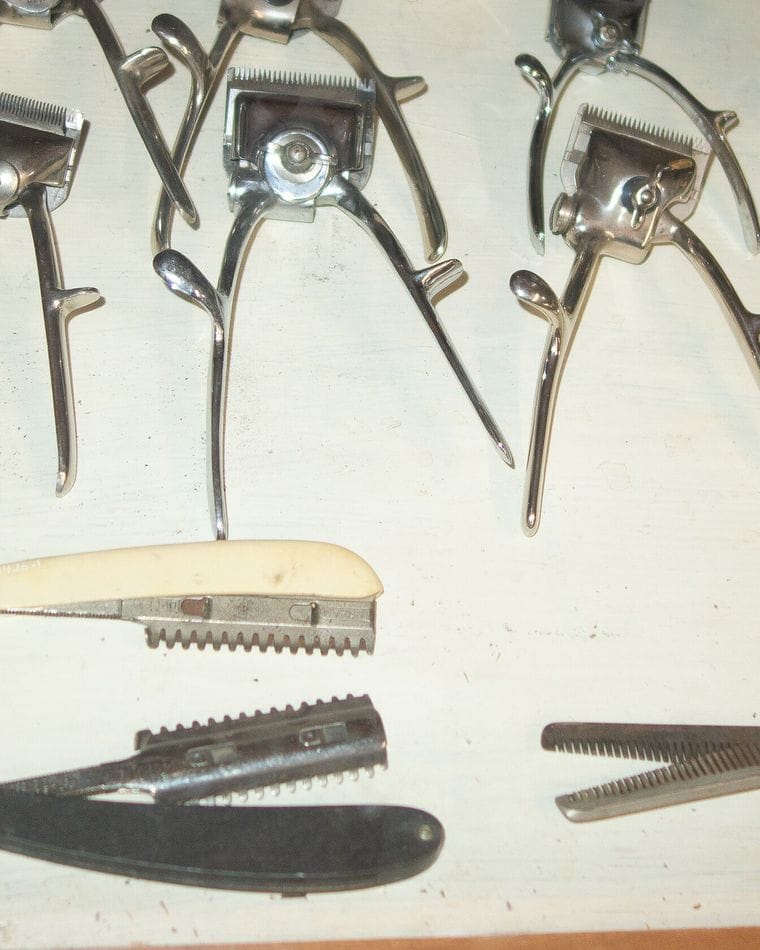
04 Hand clippers and spare blades from before electric tools. The principle has barely changed: two toothed plates sliding across each other, which is still how a modern clipper cuts. -
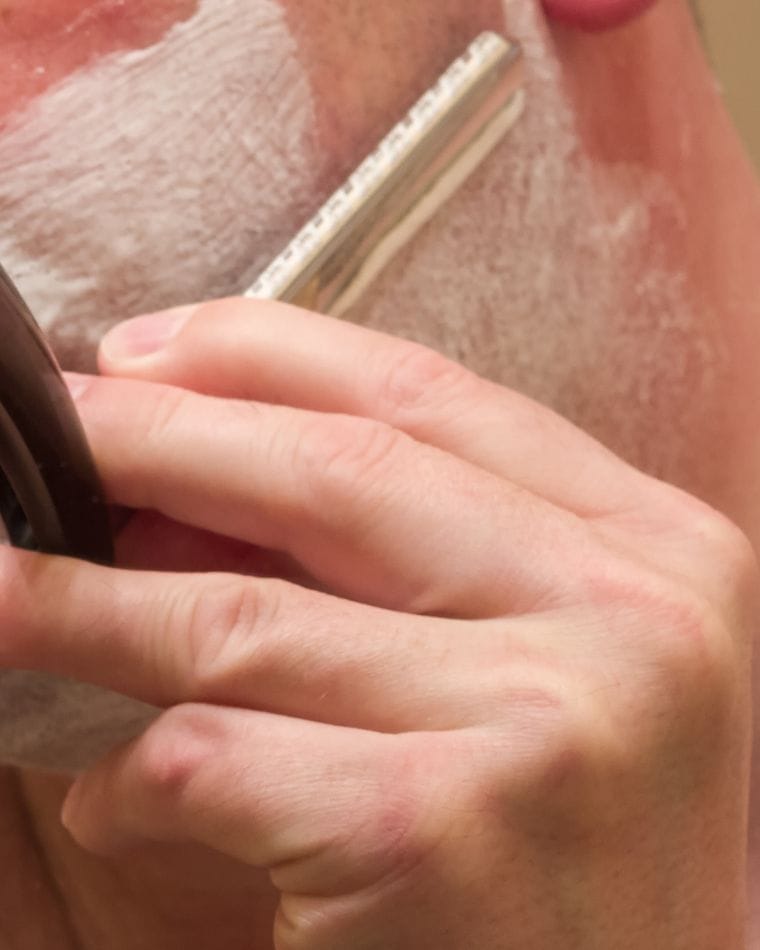
05 A straight razor on lather, with the free hand stretching the skin flat. A taut surface is what lets the blade take the hair without catching, and it is why a proper shave is slower than it looks. -
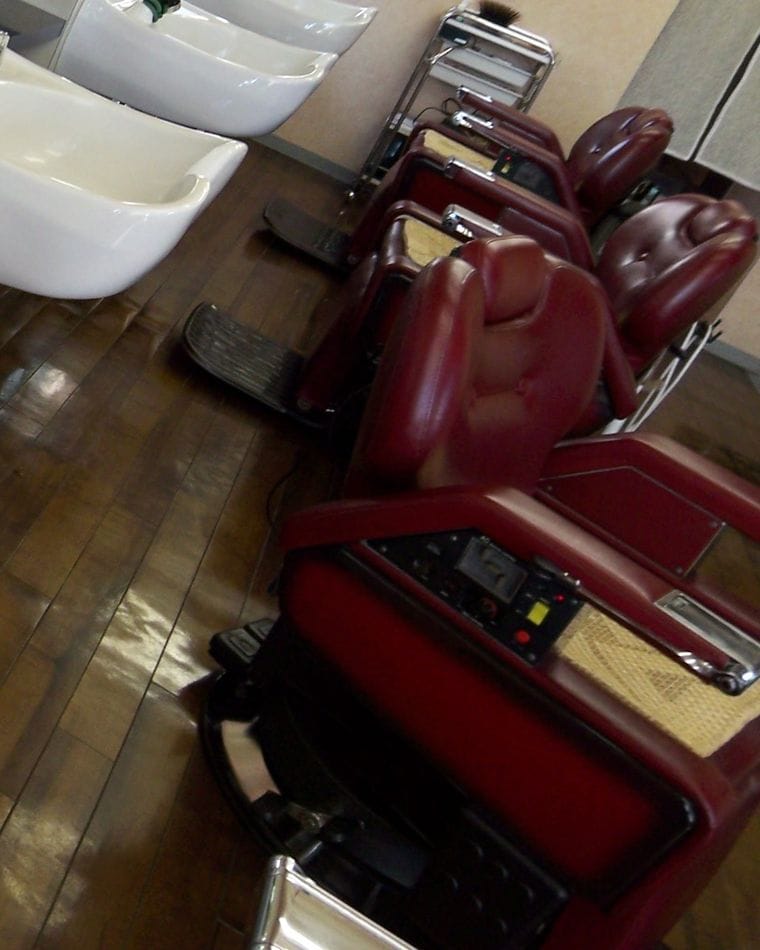
06 A row of chairs facing their basins. Each station keeps its own clippers, combs and towels, so nothing in use at one chair is passed to the next client until it has been cleaned. -
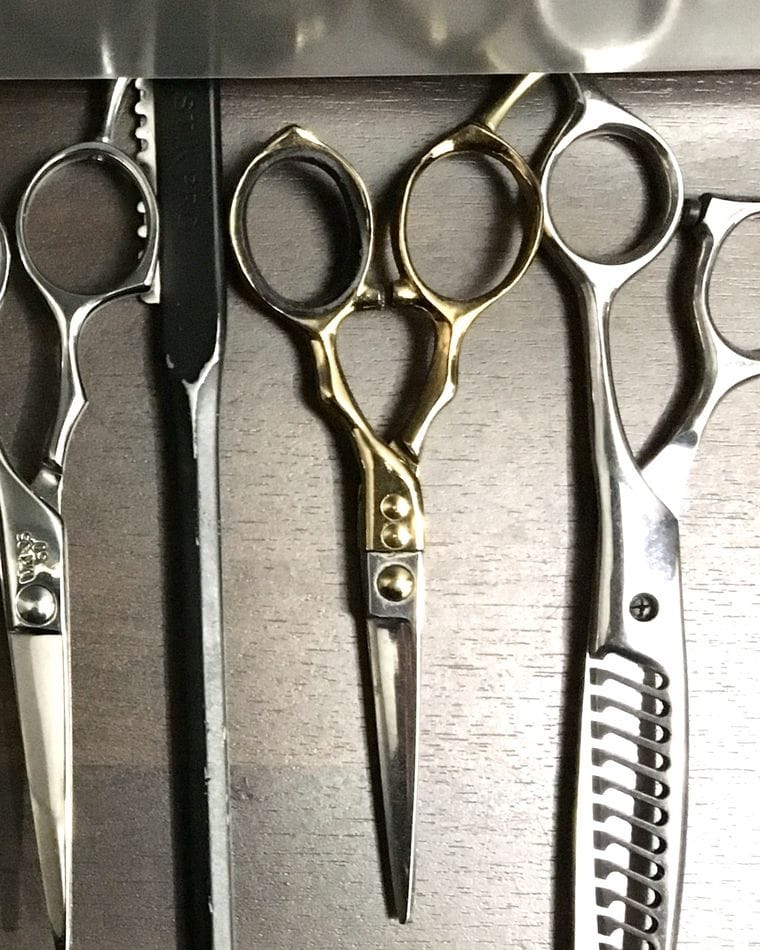
07 Cutting scissors and thinning shears. Straight blades take length and set lines; the toothed thinning blade removes bulk without shortening, which is how a thick crown is made to sit flat. -
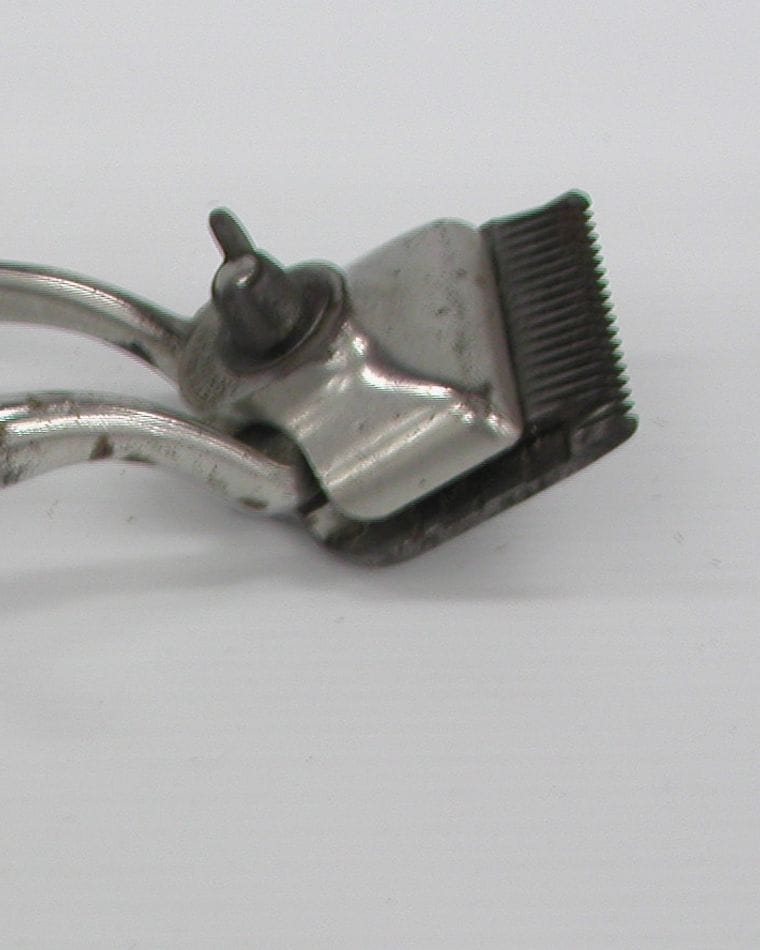
08 The cutting head of an early hand clipper. Its teeth cut at one fixed depth, and every guard fitted to a modern clipper exists to change that depth by a known number of millimetres.
Before, at the chair, finished
The three stages a haircut passes through, shown with three of the same licensed photographs used above. They illustrate the stages of the work. None of them is a photograph of a cut given by this business.
-
Before
The hair is read first. It is combed out in the direction it will be worn, the length is agreed in words, and the fade line is shown with the comb rather than taken from a photograph.
-
At the chair
The base is taken down, the guards are worked upward and the blend is refined with scissors over comb. The client is turned to the mirror whenever the shape changes.
-
Finished
The neckline and edges are finished with a razor, the hair is styled, and the hand mirror goes round the back so anything uneven is corrected while the client is still in the chair.
Ask about a cut
The service wanted and a day that suits are enough to start. The shop replies with the times a chair is open.