Built for real takes
Home interfaces let anyone sketch a great demo, and the studio is happy to work from them. Afterglow Recording House exists for what a bedroom cannot give you: air moving around real drums and voices, honest low end, and a second set of experienced ears so you are not engineering yourself.
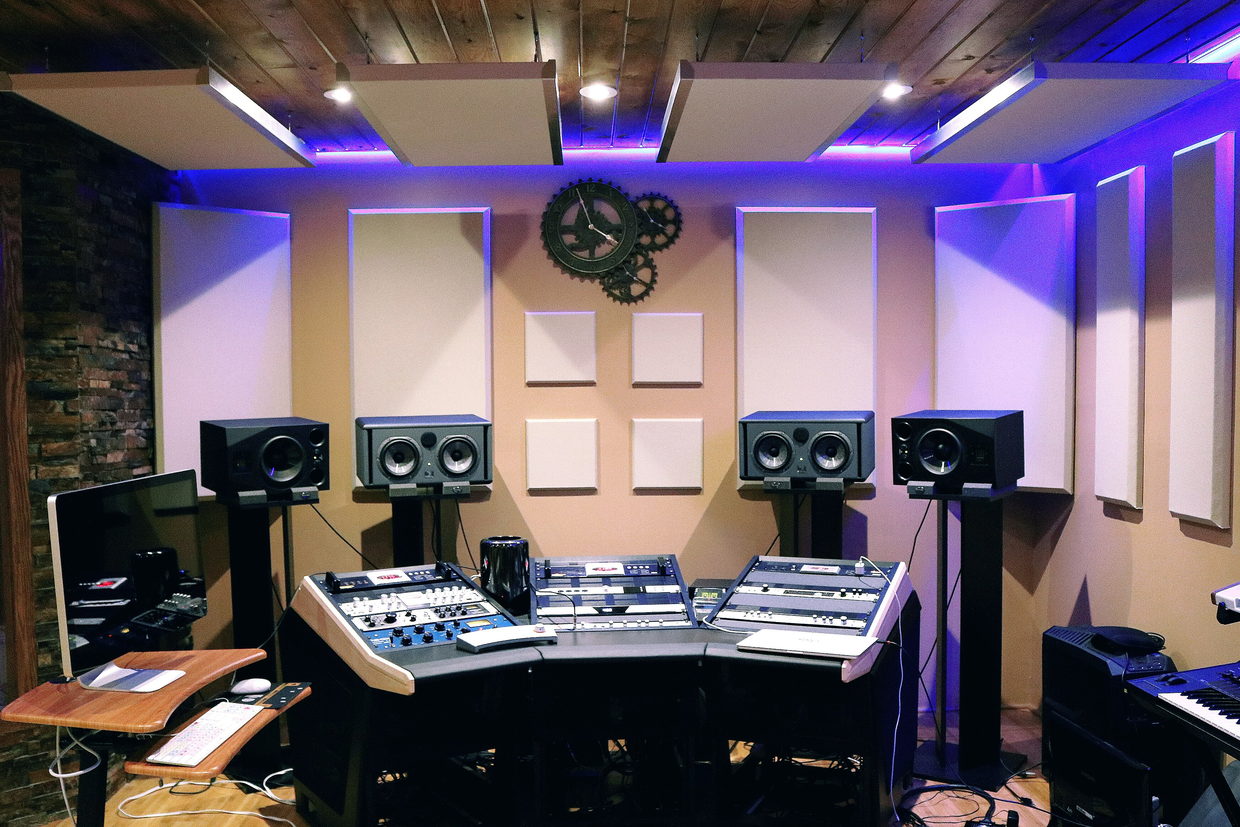
Afterglow Recording House occupies one floor on Afterglow Court: a control room with the desk against the long wall, a live room behind glass, and a small booth off it for close work. The rooms are built as rooms within a room, with isolated walls, quiet ventilation and broadband bass trapping, so a fingerpicked acoustic guitar and a cranked tube amp can share the floor without noise-floor compromises.
Vintage gear is only romantic when every switch and tube works silently on session morning, so the analogue paths are recapped, calibrated and bench-tested routinely and paired with Pro Tools HDX recall. Six services, six published rates. Hours run to the ones listed on the Contact page, and a Saturday is arranged in advance rather than assumed.
Three studio standards
-
Patched off your clock
Send your input list or reference tracks 24 hours ahead and the stands, lines and cue boxes are patched before your billed time starts.
-
Your files, portable
You leave with organised, sample-accurate consolidated WAV files and native Pro Tools sessions, never trapped in a proprietary format.
-
No gear upcharges
Every microphone, preamp, house drum kit, the upright piano and every amp in the working inventory is included in the room rate.
How a session comes together
-
Step 1
Talk it through
Tell the studio about the project, the reference records, the lineup or the mix track count, and ask for a short listening tour between sessions.
-
Step 2
Lock the dates
A 50% deposit reserves the block. Rough demos, BPMs and backline notes on the input sheet let the studio match the engineer and the mic setup.
-
Step 3
Load in and play
Arrive to pre-checked headphone cues and spend the session on performance and tone rather than troubleshooting.
-
Step 4
Revise and archive
Review passes over a lossless stream, send revision notes, then download masters and stems, backed up on the studio RAID for 12 months.
What the studio does not do
No video production and no equipment hire off site. Session backups are kept on the studio RAID for a year after the project. A session that needs a larger live room than this floor holds is said so plainly rather than squeezed in.
Come and listen
First single or tenth album, the patchbay is prepared the same way. Send a note about the project and the studio replies with the room and the engineer.